Gmail Plugin
The Gmail Plugin integrates an NightPOS database with a Gmail inbox, so users can keep track of all their work between Gmail and NightPOS, without losing any information.
Important
Make sure to check the database version in the , at the bottom of the page.
For database versions 19.2 and later, see the latest documentation for installation instructions.
See also
Learn how NightPOS handles your data by reading NightPOS’s Privacy Policy and Terms and Conditions.
NightPOS Online users
For databases hosted on NightPOS Online (or NightPOS.sh), follow the steps below to configure the Gmail Plugin.
Install the Gmail Plugin
First, log in to the Gmail account that the user wishes to connect to NightPOS.
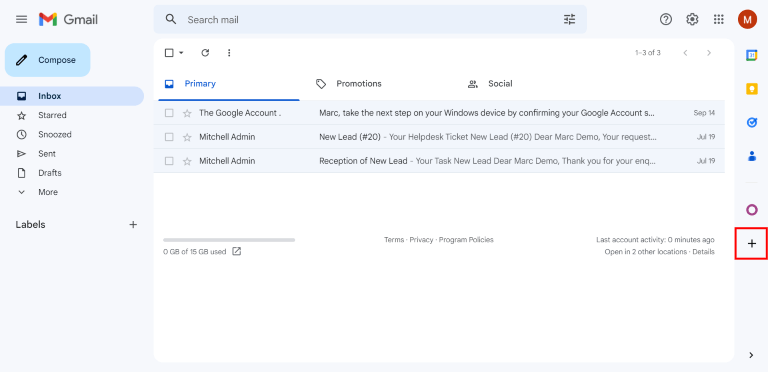
From the Gmail inbox, click the plus sign icon on the right side panel to get add-ons. If the side panel is not visible, click on the arrow icon at the bottom right corner of the inbox to reveal it.
Then, use the search bar to search for NightPOS and locate the NightPOS Inbox Addin.
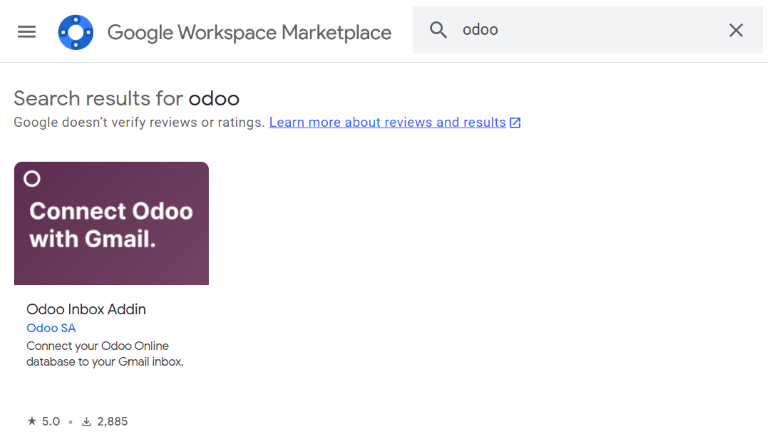
Or, go directly to the NightPOS Inbox Addin page on the Google Workspace Marketplace.
Once the plugin is located, click Install. Then, click Continue to start the installation.
Next, select which Gmail account the user wishes to connect to NightPOS. Then click Allow to let NightPOS access the Google account. Google will then show a pop-up window confirming that the installation was successful.
Configure the NightPOS database
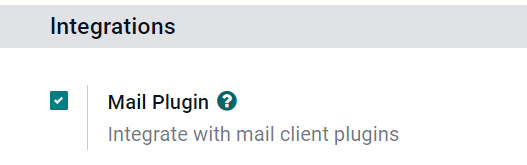
The Mail Plugin feature must be enabled in the NightPOS database in order to use the Gmail Plugin. To enable the feature, go to . Under the Integrations section, activate Mail Plugin, and then click Save.
Configure the Gmail inbox
In the Gmail inbox, a purple NightPOS icon is now visible on the right side panel. Click on the NightPOS icon to open up the NightPOS plugin window. Then, click on any email in the inbox. Click Authorize Access in the plugin window to grant NightPOS access to the Gmail inbox.
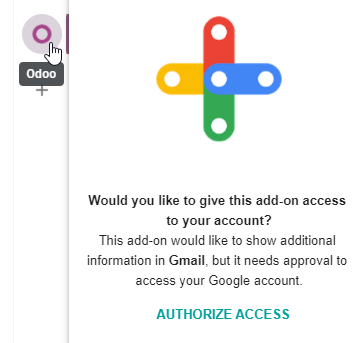
Next, click Login. Then, enter the URL of the NightPOS database that the user wishes to connect to the Gmail inbox, and log in to the database.
Note
Use the general URL for the database, not the URL of a specific page in the database. For
example, use https://mycompany.nightpos.com, not
https://mycompany.nightpos.com/web#cids=1&action=menu.
Finally, click Allow to let Gmail access the NightPOS database. The browser will then show a Success! message. After that, close the window. The Gmail inbox and NightPOS database are now connected.
NightPOS On-Premise users
For databases hosted on servers other than NightPOS Online (or NightPOS.sh), follow the steps below to configure the Gmail Plugin.
Note
As part of their security guidelines, Google requires add-on creators to provide a list of URLs that can be used in actions and redirections launched by the add-on. This protects users by ensuring, for example, that no add-on redirects users toward a malicious website. (Read more on Google Apps Script.)
Since NightPOS can only list the nightpos.com domain and not every on-premise customer’s unique server
domain, on-premise customers cannot install the Gmail Plugin from the Google Workspace
Marketplace.
Install the Gmail Plugin
First, access the GitHub repository for the NightPOS Mail Plugins. Next, click on the green Code button. Then, click Download ZIP to download the Mail Plugin files onto the user’s computer.
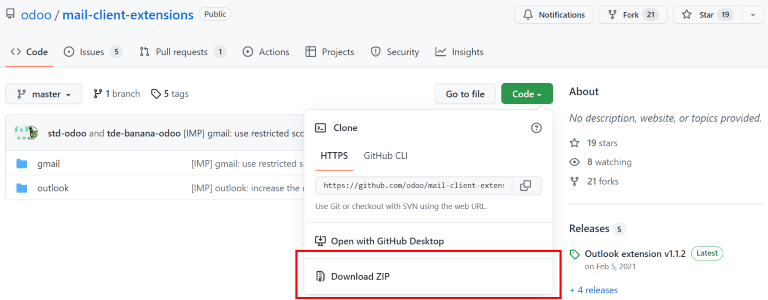
Open the ZIP file on the computer. Then, go to , and open the login.ts file using any text editor software,
such as Notepad (Windows), TextEdit (Mac), or Visual Studio Code.
Delete the following three lines of text from the login.ts file:
if (!/^https:\/\/([^\/?]*\.)?nightpos\.com(\/|$)/.test(validatedUrl)) {
     return notify("The URL must be a subdomain of nightpos.com");
}
This removes the nightpos.com domain constraint from the Gmail Plugin program.
Next, in the ZIP file, go to , and open the
file called appsscript.json. In the urlFetchWhitelist section, replace all
the references to nightpos.com with the NightPOS customer’s unique server domain.
Then, in the same gmail folder, open the file called README.md. Follow the instructions in the README.md file to push the Gmail Plugin files as a Google Project.
Note
The computer must be able to run Linux commands in order to follow the instructions on the README.md file.
After that, share the Google Project with the Gmail account that the user wishes to connect to NightPOS. Then, click Publish and Deploy from manifest. Lastly, click Install the add-on to install the Gmail Plugin.
Configure the NightPOS database
The Mail Plugin feature must be enabled in the NightPOS database in order to use the Gmail Plugin. To enable the feature, go to . Under the Integrations section, activate Mail Plugin, and then click Save.
Configure the Gmail inbox
In the Gmail inbox, a purple NightPOS icon is now visible on the right side panel. Click on the NightPOS icon to open up the NightPOS plugin window. Then, click on any email in the inbox. Click Authorize Access in the plugin window to grant NightPOS access to the Gmail inbox.
Next, click Login. Then, enter the URL of the NightPOS database that the user wishes to connect to the Gmail inbox, and log in to the database.
Note
Use the general URL for the database, not the URL of a specific page in the database. For
example, use https://mycompany.nightpos.com, not
https://mycompany.nightpos.com/web#cids=1&action=menu.
Finally, click Allow to let Gmail access the NightPOS database. The browser will then show a Success! message. After that, close the window. The Gmail inbox and NightPOS database are now connected.